
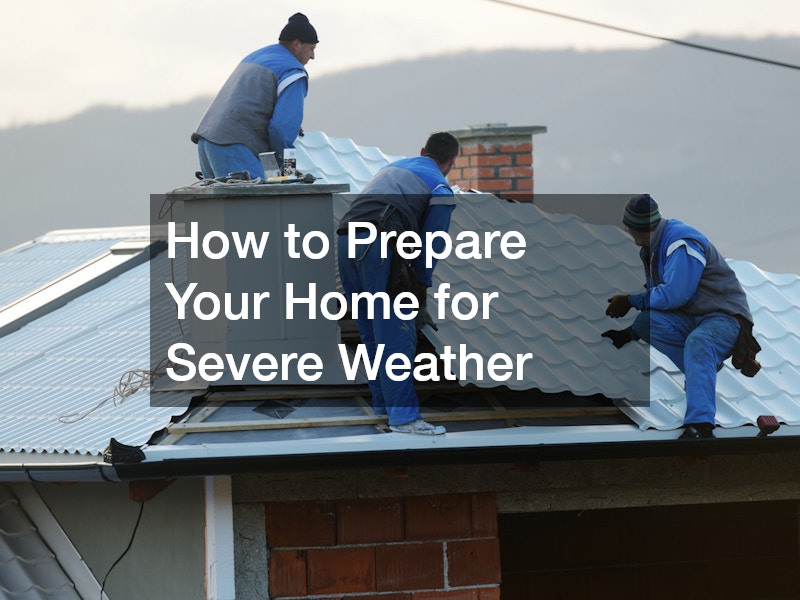
Severe weather doesn’t wreck your house – it just locates the weak spots that were already there. A missing strip of flashing, a gap around a pipe penetration, a gutter that’s pulling away from the fascia – none of these feel like priorities on a calm Tuesday. On the night of the first serious storm, they’re disasters in waiting.
The checklist below isn’t about keeping up your property values (although it will). Think of it as a defense system for your house.
Start At The Top: Roof Integrity Is Non-Negotiable
Your roof is the first line of defense for your building, protecting your home’s interior against external elements. When your roof fails, even only slightly, your entire home is at risk.
Start by walking around your home and looking up. Check for curled or cracked shingles, worn-down areas where granules are missing, and flashing that is damaged or loose around chimneys, skylights, or vents. Any of these openings can lead to wind getting under your roof and causing further damage.
A sealed roof deck can reduce the risk of water damage by up to 95% if shingles are lost during a storm. A licensed contractor can let you know if your underlayment needs updating or if it was installed to current standards.
It’s also important to consider the weather patterns in your region, for example, the roofing specifications for Northern California are not the same as for a contractor on the east coast. Getting roof repair roseville ca from someone who knows your local weather patterns means the repair spec actually matches the threat.
Lastly, don’t forget to inspect the soffit and fascia. Damaged areas on these components can let pests and moisture into your attic and are another weak point during a storm.
The Drainage System Has To Handle What The Roof Sheds
The purpose of your gutters is to direct water off the roof and away from the foundation. If they’re clogged, sagging, or too short, that water ends up pooling at the base of your walls, and the soil near your foundation becomes oversaturated.
If you’re in a snowy/icy part of the world, secure your gutters with heavy-duty hangers – the standard ones aren’t rated for that weight. Downspouts should extend at least five feet from the foundation. If you’re in a flood-prone area, verify that the grade of the soil around your home still slopes away from the structure; it shifts over time.
If your home has a basement or below-grade living space, test your sump pump before the wet season. Pour water into the pit until the pump kicks on and expels it, then verify the float trigger operates as intended. A failed sump pump during a heavy rain event is the sort of disaster that will cost you tens of thousands to remediate.
Seal The Envelope Everywhere The Weather Can Push Through
Strong winds lead to pressure variations. If the outside has high pressure while the inside doesn’t, air – and water – will enter any possible crevice to balance it out. This is how storms push water against walls that seem undamaged on the outside.
Inspect all around each window, door, and utility penetration with a hard look. Apply top-quality exterior caulk rated for temperature cycle movement and swap out weatherstripping that’s flattened or broken. Utility penetrations – gas lines, electrical conduit, HVAC lines – where the initial sealant tends to be poor and replaced the least, deserve the most attention.
While cold weather is an issue, thermal bridging is a related concern. Without enough insulation, heat leaks out faster and those surfaces become condensation points. In extreme cold, this will give you interior moisture with no obvious leak.
Audit The Attic and Assess The Trees
There are two things that homeowners consistently underestimate: what’s happening in the attic, and what the trees are doing.
An attic that’s too warm in winter – due to low insulation and heat escape from the living space below – sets up conditions for ice damming. The snow melts at the peak, runs down to the cold eaves, and then refreezes. Eventually, the ice works under the shingles and drives water into the structure. The cure is to balance the insulation R-value with enough soffit-to-ridge ventilation. Just dumping in more insulation won’t do it.
Go for a walk around your property and look up at the trees. Dead limbs, leaning trunks, and shallow-rooted species too close to the house are hazard trees. An arborist can tell you the risk, before a windstorm does it for you, the hard way.
Spells of extreme weather have a way of showing up sooner than the weatherman predicts. The buildings that survive aren’t luckier than the ones that don’t. It’s just that someone ran this checklist before the season changed.
