
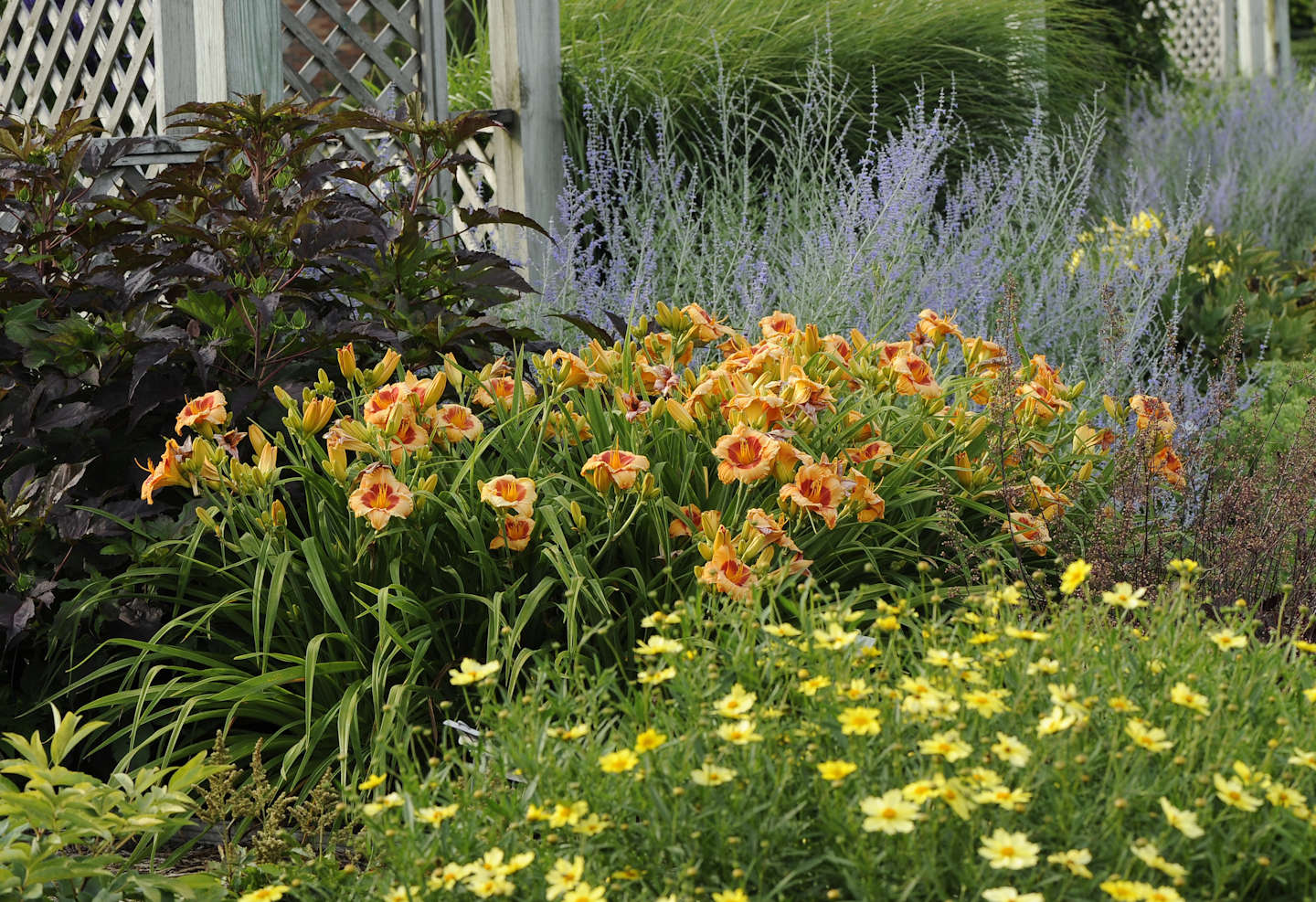
An entryway planting is judged at close range and in everyday repetition. It is seen by guests, delivery drivers, neighbors, and the people who live with it each day. That makes the entry different from a broad border. Plants near the door need to be welcoming, scaled well, easy to keep tidy, and attractive even when someone pauses beside them.
Gardeners choosing daylily plants for sale for an entryway should think beyond a cheerful bloom. A daylily can frame a path, repeat color near a porch, soften steps, or connect a doorway to the rest of the landscape. Its value increases when the clump feels intentional from the sidewalk and pleasant from only a few feet away.
Frame the Route Without Narrowing It
The design question behind this section is how people move through the entry. For entryway color and structure, plants near doors and paths interact with feet, bags, doors, pets, and daily routines. Daylilies can soften the route, but mature foliage should not make the entrance feel crowded. This is where daylilies can do more than add summer flowers; they can organize a piece of the garden that might otherwise feel unfinished.
For entryway plantings, the premier grower of Daylily plants https://swallowtail-daylilies.com/ looks first at proportion and movement. Keep the route clear, place color where it welcomes rather than blocks, and choose companions that keep the bed tidy after the main bloom. That perspective turns the entry into a durable garden moment instead of a seasonal decoration.
To make the idea work, set clumps far enough back to allow comfortable passage while still contributing color. A pair of repeated clumps can mark the approach without forming a barrier. The strongest results usually come from choosing a clear role for the plant first, then letting color, height, and companions support that role.
Problems appear when gardeners rely on planting close to the walkway because the young plant seems small. The mature plant should be the basis for spacing. A welcoming entry is generous to both plants and people. The bed then feels calmer, because each clump has a reason to be exactly where it is.
A final check is to imagine the view when the plant is not in full flower. If how people move through the entry still gives the foliage shape, spacing, and neighboring textures a useful purpose, the placement is likely strong. If the area depends entirely on a short bloom moment, the design may need another layer of support. Ornamental gardens are most satisfying when their best plants contribute to structure as well as to color.
The same check can be repeated after the first full season. Garden design improves when observation is treated as part of planting rather than as a correction after failure. If planting close to the walkway because the young plant seems small. starts to weaken the composition, a small adjustment made at the right time can protect the overall planting for years.
Use Color Where Guests Naturally Pause
The first consideration is the places where people slow down and notice details. In entryway color and structure, entryways include stopping points near gates, steps, railings, and doors. Daylily bloom has more impact when placed where people actually look. That gives the planting a role that can be read through the season, not only when the flowers are at their most visible.
From a practical standpoint, position clumps near pause points while preserving clear access for movement and maintenance. A flower seen beside a porch step may matter more than one hidden deeper in the foundation bed. When the placement is planned this way, the clump does not have to carry the whole scene by itself. It contributes one dependable piece to a larger garden composition.
The mistake to avoid is placing the brightest plant where it is visible only from the street. Entry color should reward both distant approach and close arrival. The best placement considers how the space is used, not only how it is photographed. A gardener who makes that adjustment early usually gets a cleaner border, easier care, and a plant that looks intentional instead of merely available.
Seasonal observation should return to the places where people slow down and notice details after planting. Watch whether entryways include stopping points near gates, steps, railings, and doors. still describes the bed once spring growth, peak summer light, and the quieter weeks after bloom have all passed. If placing the brightest plant where it is visible only from the street. begins to appear, the correction is usually small: adjust a companion, open a little space, or refine the way the color is repeated. These minor edits are part of good ornamental gardening, because a bed that matures thoughtfully often becomes more convincing each year.
The most useful habit is to connect the choice back to arrival, framing, and close-range ornamental detail. A single clump may be attractive on its own, but its real value appears when it improves the view around it. The best placement considers how the space is used, not only how it is photographed. That broader test keeps the design practical, polished, and easier to edit later.
Keep Foliage Presentable After Bloom
A strong plan begins with the close-range appearance of the plant. Around entryway color and structure, entry beds are inspected more closely than many other garden areas. Daylily foliage can look clean and graceful when it has room and suitable companions. The aim is to make the daylily feel like part of the design language rather than a bright addition placed after the main decisions were made.
Good garden judgment shows in the details: surround clumps with plants that hide bare soil and contrast the arching leaves. Low mounds, compact shrubs, or fine-textured perennials can make the entry feel finished. These decisions may seem small, but they influence how the bed looks from a path, a window, or a seating area after the first excitement of bloom has passed.
What weakens the effect is choosing plants only for the flower week. The entry must look cared for before and after peak bloom. Foliage quality matters when the garden is seen at hand’s length. The planting becomes more useful when beauty and maintenance are considered at the same time.
It is also worth thinking about how surround clumps with plants that hide bare soil and contrast the arching leaves. will age. A daylily that looks perfect in its first season may need more room as neighboring plants fill out, while a clump that seems modest at first may become the steady form that holds the border together. The gardener should not judge the design by one week of flowers alone. The better measure is whether the close-range appearance of the plant still makes sense when foliage, companions, mulch, and seasonal cleanup are all part of the view.
This kind of planning gives the gardener more freedom, not less. Once the plant’s purpose is clear, choices around low mounds, compact shrubs, or fine-textured perennials can make the entry feel finished. become easier to make. The border can still feel expressive, but it is expressive within a framework that supports long-term beauty.
Match the Planting to the Door and Porch
One reason this subject matters is how plant form relates to architecture. In a garden shaped by arrival, framing, and close-range ornamental detail, porches, columns, steps, railings, and door colors all influence the planting. Daylilies can either harmonize with those features or compete with them. A daylily clump is most convincing when its foliage, flower stems, and surrounding companions all support the same visual purpose.
The practical move is to choose heights and colors that support the doorway rather than hiding or overwhelming it. A pale entry may welcome stronger color, while a dark or detailed facade may benefit from softer repetition. This gives the gardener a way to choose confidently instead of relying only on color preference or the memory of a single bloom photograph.
A less successful approach is designing the bed without looking back at the house. The entry garden is part of the architecture’s first impression. Plants and built features should make one another look more resolved. Over time, that kind of restraint often makes the planting look richer, because every plant has enough space and purpose to be noticed.
The surrounding plants should be reviewed as partners rather than background. Their height, texture, bloom period, and rate of growth will decide whether daylilies can either harmonize with those features or compete with them. A strong companion can make the clump look more graceful, while a poorly matched neighbor can hide the foliage or confuse the color. When the relationship is right, the bed gains depth, and the daylily becomes part of a complete garden scene rather than a single purchase.
That partnership is also what makes the planting easier to maintain. When choose heights and colors that support the doorway rather than hiding or overwhelming it. is built into the plan, small care tasks have an obvious purpose. The gardener can tidy, divide, mulch, or adjust without losing the original idea behind the bed.
Plan for Easy Cleanup in a Public Spot
The design question behind this section is the maintenance visibility of entry plantings. For entryway color and structure, spent stems, weeds, and crowded foliage show quickly near a front door. Daylilies are easier to keep presentable when clumps can be reached without stepping into the bed. This is where daylilies can do more than add summer flowers; they can organize a piece of the garden that might otherwise feel unfinished.
To make the idea work, leave access from the walk, porch edge, or a small stepping stone hidden within the planting. A reachable clump can be tidied in a minute, while an inaccessible one may be ignored until it looks tired. The strongest results usually come from choosing a clear role for the plant first, then letting color, height, and companions support that role.
Problems appear when gardeners rely on using every inch near the entry for dense planting. Maintenance space is part of a polished design. The easier the entry is to care for, the more consistently welcoming it remains. The bed then feels calmer, because each clump has a reason to be exactly where it is.
A final check is to imagine the view when the plant is not in full flower. If the maintenance visibility of entry plantings still gives the foliage shape, spacing, and neighboring textures a useful purpose, the placement is likely strong. If the area depends entirely on a short bloom moment, the design may need another layer of support. Ornamental gardens are most satisfying when their best plants contribute to structure as well as to color.
The same check can be repeated after the first full season. Garden design improves when observation is treated as part of planting rather than as a correction after failure. If using every inch near the entry for dense planting. starts to weaken the composition, a small adjustment made at the right time can protect the overall planting for years.
Connect the Entry to the Wider Garden
The first consideration is how the doorway planting relates to the rest of the landscape. In entryway color and structure, an entry can feel isolated if its colors and forms do not appear elsewhere. Daylilies can repeat a theme from the front yard, side path, or main border. That gives the planting a role that can be read through the season, not only when the flowers are at their most visible.
From a practical standpoint, echo color, foliage shape, or clump rhythm beyond the immediate doorway. A daylily near the entry can connect with another group along the walk or in a nearby mixed bed. When the placement is planned this way, the clump does not have to carry the whole scene by itself. It contributes one dependable piece to a larger garden composition.
The mistake to avoid is treating the entry as a separate container-like display. The strongest entries feel like the beginning of the garden, not an unrelated decoration. Connection gives the whole landscape a more deliberate sense of arrival. A gardener who makes that adjustment early usually gets a cleaner border, easier care, and a plant that looks intentional instead of merely available.
Seasonal observation should return to how the doorway planting relates to the rest of the landscape after planting. Watch whether an entry can feel isolated if its colors and forms do not appear elsewhere. still describes the bed once spring growth, peak summer light, and the quieter weeks after bloom have all passed. If treating the entry as a separate container-like display. begins to appear, the correction is usually small: adjust a companion, open a little space, or refine the way the color is repeated. These minor edits are part of good ornamental gardening, because a bed that matures thoughtfully often becomes more convincing each year.
The most useful habit is to connect the choice back to arrival, framing, and close-range ornamental detail. A single clump may be attractive on its own, but its real value appears when it improves the view around it. Connection gives the whole landscape a more deliberate sense of arrival. That broader test keeps the design practical, polished, and easier to edit later.
