
Your roof protects your home from rain, wind, heat, snow, pests, and moisture damage. Whether you need minor repairs, storm restoration, or a complete replacement, selecting the right residential roofing company is a decision that deserves careful research.
Roofing is a significant investment, but cost is only one part of the decision. The contractor’s workmanship, safety standards, material knowledge, communication, and warranty support can directly affect how well the roof performs. A poorly installed roof may develop leaks, ventilation problems, loose shingles, or premature deterioration, even when high-quality materials were used.
The best residential roofing company should be properly qualified, transparent about its process, and willing to explain its recommendations. Instead of choosing the first contractor available, compare several companies and evaluate the complete value offered by each one.
Start With a Professional Roof Inspection
Before requesting replacement estimates, determine what your roof actually needs. Water stains, missing shingles, damaged flashing, or granules in the gutters do not automatically mean the entire roof must be replaced. Some problems can be corrected through targeted repairs, while widespread deterioration may make replacement the more practical option.
A qualified roofer should inspect the shingles or exterior roofing material, flashing, penetrations, valleys, gutters, ventilation, and visible roof decking. When accessible, the attic should also be checked for moisture, staining, damaged insulation, mold-like growth, and inadequate airflow.
Be cautious if a contractor recommends a complete replacement after only looking at the roof from the ground. A reliable inspection should produce clear findings, supporting photographs, and an explanation of the available options. The contractor should distinguish between urgent defects, maintenance concerns, and improvements that are optional.
Modern roofing companies may use digital measurements, aerial imagery, moisture-detection equipment, or drones to support an inspection. These tools can improve documentation and measurement accuracy, but they should complement professional judgment rather than replace a physical assessment when one is safely possible.
Verify Licensing, Insurance, and Business Credentials
Requirements for roofing contractors vary by state and local jurisdiction. Ask each company for its license number when licensing is required, and verify that information with the appropriate authority. A business registration alone may not qualify a company to perform roofing work.
Request current certificates of general liability insurance and workers’ compensation coverage. General liability insurance may provide protection when the contractor damages your property. Workers’ compensation insurance helps address injuries involving the company’s employees. Do not rely solely on an insurance logo displayed on a website or vehicle.
You should also confirm the company’s physical business location, legal name, telephone number, and history in the area. A local presence can make warranty service and follow-up communication easier. However, being local should not be treated as automatic proof of quality. Credentials, workmanship, references, and contract terms still need to be evaluated.
Manufacturer certifications may indicate that a contractor has completed product-specific training or met certain business requirements. Ask what a certification covers and whether it gives you access to an enhanced material or system warranty.
Evaluate Relevant Roofing Experience
The number of years a company has operated can be useful, but relevant experience matters more. A contractor who frequently installs asphalt shingles may not be the best choice for a complex slate, tile, low-slope, or standing-seam metal roof.
Ask whether the company has completed projects involving your roof’s material, pitch, architectural style, ventilation design, and weather conditions. Request recent examples that are similar to your home rather than relying only on a general portfolio.
Find out whether the company uses employees, subcontractors, or a combination of both. Subcontracting is common and is not automatically a concern. What matters is who will supervise the project, how workers are trained, whose insurance covers them, and who remains responsible for correcting problems.
Knowledgeable contractors should be able to explain installation details in plain language. They should discuss the full roofing system, including the deck, underlayment, flashing, ventilation, fasteners, drip edge, leak barriers, and finished roof covering. A roof is not simply a layer of shingles.
Read Reviews With a Critical Eye
Online ratings can help identify patterns, but the average score does not tell the whole story. Read recent positive, neutral, and negative reviews. Look for repeated comments about communication, cleanliness, scheduling, unexpected charges, warranty service, and the handling of complaints.
A company with only perfect reviews may still deserve closer examination, particularly if the reviews are vague or were posted within a short period. Detailed feedback describing the property, work performed, and customer experience is generally more informative.
Ask the contractor for references from recent customers with comparable projects. Useful questions include whether the final price matched the contract, whether the crew protected the property, how changes were handled, and whether the contractor returned to resolve concerns.
Compare Detailed Written Estimates
Obtain written estimates from multiple qualified roofing companies. Comparing only the total price can be misleading because each proposal may include different materials, labor, disposal, ventilation, flashing, or warranty coverage.
A complete estimate should identify the proposed roofing system, manufacturer, product line, color, underlayment, flashing, ventilation work, removal method, disposal plan, permits, labor, payment schedule, and expected project scope. It should also state how damaged decking or other concealed conditions will be priced if discovered.
Extremely low bids may exclude important components or rely on lower-grade materials. They may also indicate inadequate insurance, inexperienced labor, or an unrealistic estimate that could lead to additional charges. A higher price is not proof of better work either. The objective is to compare equivalent scopes and understand why the prices differ.
Avoid paying the entire project price in advance. Deposit rules vary by location, so review local requirements and use a payment schedule tied to clear project milestones. Never sign a proposal containing blank spaces or vague descriptions.
Choose the Right Roofing Material and System
The right material depends on your climate, home structure, budget, maintenance expectations, neighborhood requirements, and preferred appearance.
Asphalt shingles remain a widely used option because they are available in many styles and price ranges. Impact-resistant products may be worth considering in hail-prone areas. Metal roofing offers durability, low maintenance, and strong resistance to fire and severe weather when properly designed and installed. Tile and slate can provide long service lives and distinctive appearances, but their weight may require structural evaluation.
Modern material selection also includes energy performance and resilience. Reflective or “cool” roofing products may reduce roof-surface temperatures in hot climates. Enhanced underlayments, improved flashing systems, and wind-rated installation methods can provide additional protection in areas exposed to severe weather.
Homeowners may also want to discuss solar readiness. Even if solar panels are not being installed immediately, planning the roof layout, remaining service life, attachment areas, and electrical pathways can prevent unnecessary complications later.
The contractor should recommend a complete system suitable for your property rather than promoting one product for every home.
Understand Ventilation and Moisture Control
Roofing problems are not always caused by the exterior material. Inadequate attic ventilation, missing air sealing, or moisture accumulation can contribute to condensation, mold, damaged insulation, ice-related problems, and premature roof deterioration.
Ventilation should be designed as a balanced system with appropriate intake and exhaust. Simply adding more roof vents does not guarantee better airflow. The system must account for the home’s construction, attic configuration, insulation, and local climate.
Ask the contractor whether the estimate includes an evaluation of existing ventilation. If major condensation or insulation problems are present, coordination with an insulation, building-envelope, or HVAC professional may be appropriate.
Professional Roofing Services and Installation
Professional roofing services and installation for your home are essential for preserving the integrity of your roof, protecting your family, and maintaining your home’s value. Hiring a licensed and reputable professional, like Pierce Roofing, to conduct repairs or installations will ensure the job is done correctly and safely the first time. In most states, any roofing contractor that contracts with homeowners must be licensed and insured with appropriate liability and workers compensation insurance coverage. It is important to do research before selecting a contractor.
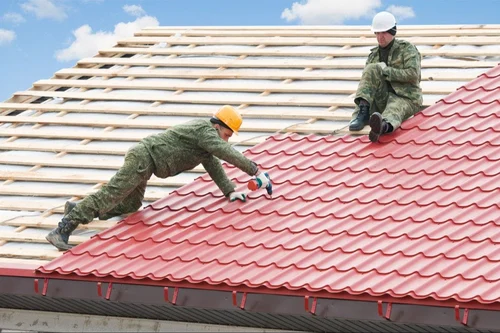
Roof work involves heights, heavy materials, power tools, and changing weather conditions. Ask how the company protects workers, residents, landscaping, siding, windows, driveways, and neighboring property. Professional crews should use suitable fall protection and keep the worksite organized.
The contractor should also explain how the roof will be protected if bad weather interrupts the installation. At the end of the project, the crew should remove debris, collect loose fasteners, clean gutters where included, and complete a final inspection with the homeowner.
Review Workmanship and Manufacturer Warranties
Roof warranties generally fall into two categories. A manufacturer warranty covers eligible roofing materials subject to its terms, while a workmanship warranty covers installation-related problems for a period defined by the contractor.
Ask for copies of both warranties before signing the contract. Review the coverage period, exclusions, maintenance obligations, transfer rules, registration requirements, and claim procedure. Do not assume that a “lifetime” warranty covers every component or all labor for as long as you own the home.
Confirm who is responsible if the manufacturer identifies installation as the cause of a failure. The contractor should provide written warranty terms rather than relying on verbal assurances.
Watch for Roofing Scams and High-Pressure Sales Tactics
Be cautious of unsolicited contractors who appear immediately after a major storm, demand a large cash payment, or pressure you to sign before obtaining another opinion. Avoid companies that offer to pay an insurance deductible, ask you to sign over insurance benefits without explanation, or promise that insurance will cover work before the claim has been reviewed.
A reputable roofer should give you enough time to examine the proposal and ask questions. Insurance coverage decisions belong to the insurer, and the homeowner remains responsible for understanding the contract.
Plan for Maintenance After Installation
Even a well-installed roof requires periodic attention. Keep gutters and drainage paths clear, trim branches that scrape the roof, and arrange inspections after severe weather or when visible changes appear.
Prompt residential roofing contractor assistance can prevent a small flashing defect, damaged shingle, or minor leak from becoming a larger structural problem. Avoid walking on the roof yourself, as this can be dangerous and may damage certain materials.
Keep the contract, photographs, invoices, product details, warranty certificates, inspection records, and maintenance documentation together. These records can support future warranty claims and provide useful information when selling the home.
Final Questions to Ask Before Hiring
Before making your decision, ask who will manage the project, who will perform the work, how property damage is handled, what happens when concealed damage is discovered, and how warranty requests are submitted. Confirm whether permits, inspections, cleanup, and disposal are included.
The best residential roofing company is not necessarily the one with the lowest bid or the largest advertising budget. It is the company that provides verifiable credentials, a thorough inspection, a clear written scope, suitable materials, safe installation practices, dependable communication, and meaningful warranty protection.
Careful comparison at the beginning of the process can reduce surprises and help you secure a roof designed to protect your home for many years.
